
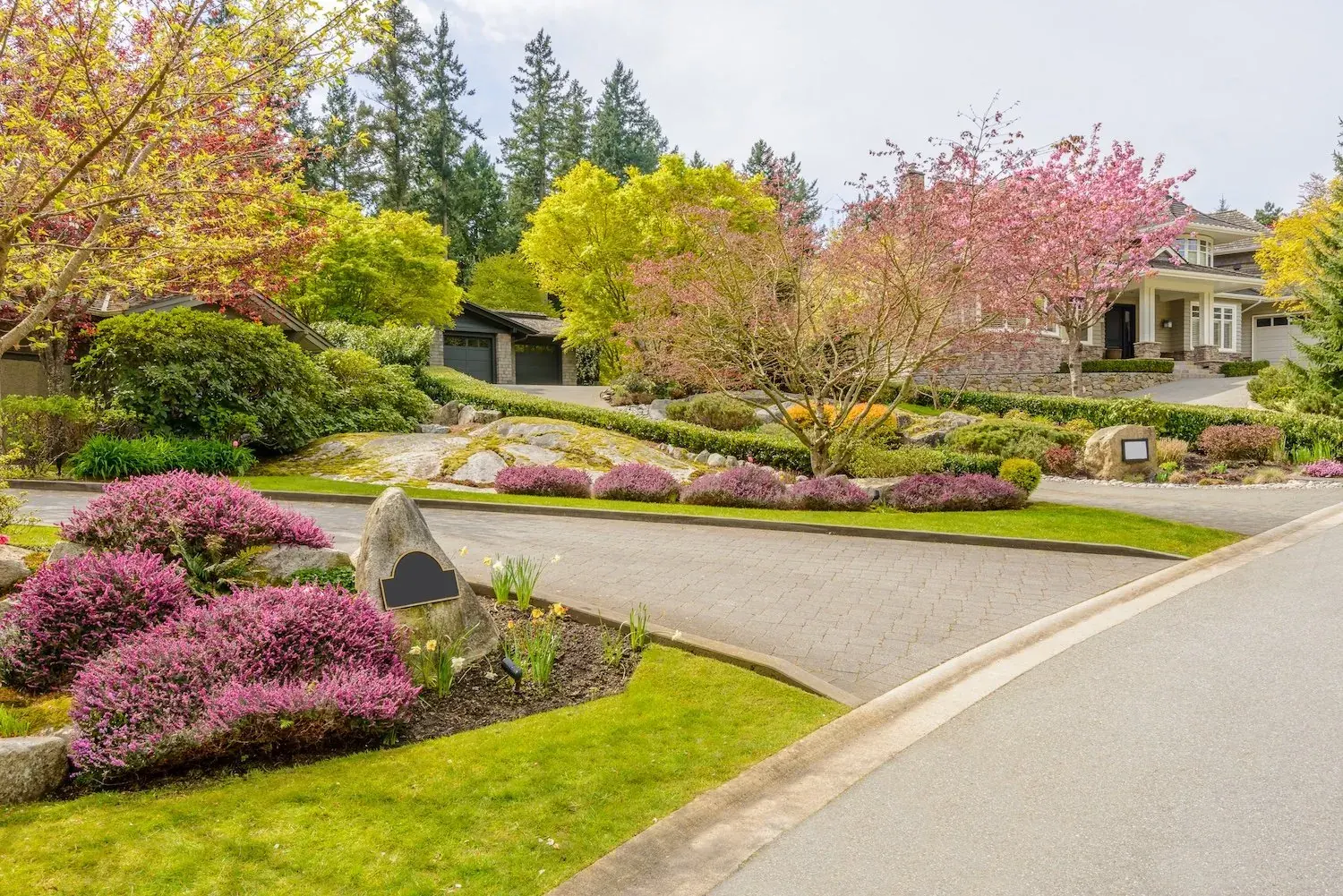
Gardening in the Pacific Northwest can be very rewarding—but only if it is done at the right time. The mild temperatures in Pierce County, the wet winters, and the dry summer mean your yard has different needs depending on the time of year. The secret to successful seasonal landscaping is understanding how to garden in harmony with the seasons.
This is your year-long calendar of what to concentrate on to help you prioritize, pick what materials to use, and keep your healthy, thriving landscape year-round.
Table of Contents
Winter (December-February): Protect, Observe, and Plan
Winter is the least active time of the year in the garden, but it’s also one of the most critical for success. This is because there is plenty of rainfall, and the plants will be growing at a slower rate because of the cooler temperatures and the saturated soil.
Some of the most important tasks are:
- Clearing away fallen leaves to prevent decay and the growth of molds
- Pruning
- Water pooling/erosion monitoring
- Protecting sensitive plants from frost
- Spring projects and materials planning
Winter is the season in which drainage issues will be most noticed. If there is standing water in low spots or around foundations, winter is the best season to assess options for improvement. Effective seasonal landscape maintenance in winter is prevention-oriented and not planting-oriented.
Using bark mulch during winter is also a good way of protecting soil and roots of plants from low temperatures. Organizing projects during winter also helps save costs during spring.
Early Spring (March to April): Reset the Landscape
With the increasing daylight, nature starts waking up. The early spring is a time of correction and preparation.
- Pruning trees and shrubs prior to the start of their active growing season
- Testing soil samples for compost/soil mix incorporation
- Renewing mulch before weeds appear
- Preparing garden beds for planting
Soils in Pierce County are usually compacted following winter rains. Soil amendments increase soil drainage and root development. This is part of seasonal landscaping and helps set the stage for the whole growing season.
Using fresh bark mulch in early spring can control weeds before they establish and give the garden beds a fresh, clean look.
Late Spring (May–June): Build Momentum
Late spring is the time when the growth of the plants accelerates rapidly.
Some key priorities include:
- Planting perennials, annuals, and vegetables
- Edging garden beds and walkways
- Consistent mulch layer thickness
- Irrigation system checks
Weed pressure is also high during this time of year, so mulch is very effective during this time. Late spring seasonal landscaping is simply maintaining the growth and preventing small problems from developing into summer issues.
This is also an opportune time to put in or upgrade walkways, rock gardens, and borders. Such projects will then be ready for their peak season.
Summer (July-August): Maintain and Protect
The summer seasons are normally dry, with vegetation transitioning from growth to maintenance stages in Pierce County.
Summer tasks include:
- Watching irrigation closely
- Minimizing water loss using mulching
- Monitoring for heat stress symptoms
- Controlling crowded zones
Mulch can be very useful during the summer season as it prevents the loss of soil moisture and keeps the soil at the right temperature. Correct seasonal landscaping during the summer season saves water and keeps the plants in the best possible health.
Areas consisting of rock and gravel also excel during this time, as they require little maintenance, can be kept dust-free, and provide good durability when walked upon.
Early Fall (September-October): Restore and Improve
Early fall is actually one of the best times of the year for landscaping in the Pacific Northwest.
Fall priorities include:
- Renewing old garden planters
- Adding Compost and Soil Amendments
- Planting trees and shrubs
- Applying fresh bark mulch
When it comes to plants, cooler weather and adequate moisture help plants develop root systems with less stress. The seasonal landscaping of fall is about restoration: fixing summer damage in preparation for the next growing season.
Mulched applied during the fall season also protects the soil from the winter rains.
Late Fall (November): Prepare for Dormancy
Late fall is more focused on finishing the growing season on a positive note and avoiding damage that might occur during winter.
- Final cleanup of leaves
- Sensitive plant protection
- Drainage and slope inspections
- Building up stocks of materials in winter
This is a part of seasonal landscaping that is often neglected, though it is a crucial part of success during spring. Some problems with drainage and soil that have been left unsolved during the end of fall can become much more costly to fix.
The Role of Local Materials in Pierce County
Not all barks, soils, and rocks are created equal for Northwest weather. Locally available materials are better adapted to the precipitation and soil conditions of Pierce County. This is why many residential and commercial property owners turn to G & L Bark Supply for all their seasonal landscaping needs. Their bark products, compost, soils, and rocks are all designed to assist with all levels of seasonal landscaping.
A Seasonal Landscaping Strategy Pays Off
Effective landscapes are not created within one season. Rather, landscapes are created through careful landscaping practices that are informed and carried out over the course of the entire year. To achieve this, you should adopt the strategy known as seasonal landscaping.
When the timing is right and the right materials are available, Pierce County can support thriving landscapes, and G & L Bark Supply in Spanaway is your best resource!