
In the Pacific Northwest, we enjoy mild fall temperatures with plenty of rain but little snow. That makes autumn the perfect time to prepare your garden for harsher weather in winter. Think of your garden like a bear. During winter, it hibernates, and it needs protection and nutrition to do so.
Winter garden prep safeguards your plants and enriches the soil for vibrant growth when spring returns. At G&L Bark Supply in Pierce County, we have all the landscaping supplies you need to prepare your garden for winter.
Table of Contents
Garden Prep for Winter: Cover, Prune, and Protect
Your winter garden prep will depend greatly on what’s in your garden, but generally, there are three steps to take: cover, prune, and protect.
Cover soil and plant roots with compost and mulch. Cover the compost pile with plastic or straw.
Prune berry plants and some perennials, but don’t prune trees and shrubs.
Protect young trees, shrubs, and roses from heavy snow.
Let’s explore each of these steps in more detail, as well as some other landscaping and lawn maintenance to consider in the fall.
Cover with Compost and Mulch
Just as we enjoy warm blankets in the chilly winter, your garden will enjoy a thick layer of compost and mulch. It’s common to add compost in the spring before planting, but there are benefits to using it in the fall. Think of it as feeding the soil to keep it healthy while it hibernates over winter. It will soak up all those nutrients over several months and be ready to support new plants in the spring.
Where and Why to Add Compost
Compost enriches the soil. It also acts as a protective layer, similar to mulch, that shields plant roots, helping maintain adequate moisture and temperature. You can make your own compost with food scraps and yard waste. This takes several months, however, so if you don’t already have a compost pile ready to go, G&L Bark offers high-quality Cedar Grove and mushroom compost.
Add a few inches of compost to your garden bed before the ground freezes. You can also add a little compost around the bases and roots of perennial plants to give them some extra protection and nutrition over the winter. If your lawn has bare spots, adding some compost can help nourish the soil for future growth and prevent soil compaction.
Where and Why to Add Mulch
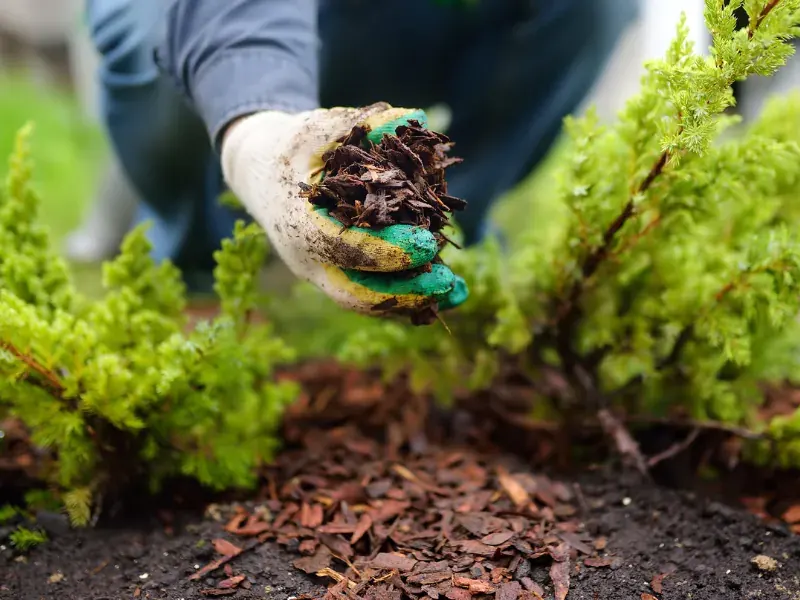
Decorative bark is a type of mulch that serves both aesthetic and functional purposes. Mulch is a top dressing for your garden, made of bark chips, sawdust, pine needles, or straw. It retains soil moisture and helps reduce weed growth and erosion. Decorative bark is often the most attractive and effective option.
Anywhere you add compost for winter garden prep, it’s a good idea to add a top layer of mulch, too. Apply a thin layer of mulch over the garden bed, around plant roots, and to the base of trees and shrubs.
Prune Berries and Perennials, Not Trees
Many of your perennial plants and berries will benefit from pruning before winter. Fall-bearing raspberries, for example, should be pruned down to the base. Some perennial flowers, like peonies and bearded irises, should also be cut back. However, many types of berry and perennial plants do not need pruning. Do a little research on the specific plants in your garden for if and when to prune.
One area of your landscaping you should never prune in autumn is trees and shrubs, even if they’re overgrown. Pruning these woody plants gives them an open wound, stimulating growth, but they won’t be able to heal and grow before cold sets in. Leave tree trimming for spring.
Protect Trees and Roses
Here in the Tacoma area of the Pacific Northwest, we don’t see heavy snow very often. But if heavy snow is in the forecast or you want to play it extra safe, consider protecting shrubs, rose bushes, and young trees with fencing. You may also want to cover the trunks of young fruit trees with pest-proof tree wrap.
Other Winter Lawn Care and Maintenance
What care and winter garden prep your lawn needs depends on your specific landscaping and plants. But here are some other general tips to consider.
- Mow your lawn as late as grass grows. Overgrown grass covered in snow often turns into brown patches in the spring.
- Turn off your watering system and disconnect the hoses.
- Help your garden allies. Keep bird feeders stocked through the winter, and consider creating bee nesting sites. You can buy bee houses, drill holes in wood, leave some hollow plant stems, and leave an untouched, unmowed corner of the yard for bees to shelter in.
- Rake leaves and remove debris. A layer of sodden leaves isn’t ideal for your lawn. Instead, chop up leaves to add to your compost pile, or use them as mulch that also offers winter housing to beneficial insects.
- Cover your compost pile with plastic or a thick layer of straw.
Get All Your Winter Garden Prep Essentials from G&L Bark Supply
Winter garden prep protects your plants and gives you a headstart on a beautiful, robust garden next year. You might have your own compost pile and mulch supply, but if you don’t, G&L Bark & Supply has everything you need. Stop by for high-quality compost, mulch, seeds, topsoil, and more to prepare your garden for winter!